
Deezer: Music & Podcast Player
Deezer MusicMusic & Audio
4.351.19K Reviews
- Version
- Varies With Device
- Installs
- 100.00M
- Age Rating
- Teen
Screenshots




Our Review of Deezer: Music & Podcast Player
 Analysis by Appyee
I usually judge a music app by what happens after the first burst of curiosity: do I still open it when I already know what I want to hear, and does it make ordinary listening easier? Deezer has a good chance of earning that habit. It brings music and podcasts together, gives me ways to find new listening without constant searching, and can keep selected audio available offline. Its appeal is strongest for people who enjoy both familiar favorites and occasional discoveries, rather than listeners who want nothing beyond a manually maintained collection.
As a free music and audio app from Deezer Music, it sits in a crowded category where the main alternatives also promise broad catalogues and personalized recommendations. I see its value less in any single headline feature and more in how discovery, saved listening, and everyday playback fit together. The app has a 4.2 average from around 3.6 million ratings, and its reach is substantial, with over 100 million installs. Those figures suggest a well-established service, but whether it deserves a permanent place on your phone comes down to your routine and tolerance for the trade-offs of a free tier.
Getting Started with Deezer
The first thing you notice when you open the Deezer: Music & Podcast Player is its sleek and intuitive interface. Signing up is a breeze—within minutes, I was exploring an extensive library of tunes. The app offers different subscription levels, but even the free version provides a solid experience, albeit with ads here and there.
For a first-week test, I’d avoid trying to build a perfect library immediately. Search for a few artists you genuinely play often, save a couple of albums or playlists that fit different situations, and then give the recommendations time to respond to what you actually listen to. That is a more useful test than judging the app from a quick browse: a service can look impressive on day one but feel repetitive if its suggestions do not match your habits.
It is also worth deciding early what you expect from a free service. Deezer is free to install, while in-app purchases range from $2.49 to $218.99 per item. The app is rated Teen. I would treat those details as practical context rather than a reason to subscribe automatically: listen for a while, notice which limits or interruptions affect you, and only then decide whether a paid option is worth considering for your own use.
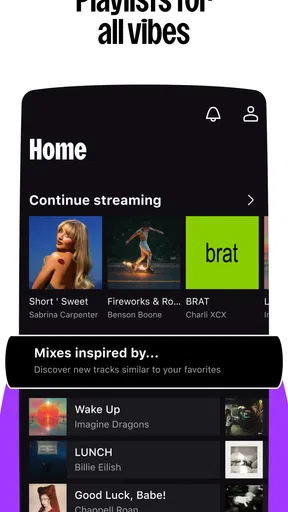
Once you’re in, the homepage greets you with personalized playlists and recommendations, which is a nice touch. The app learns from your listening habits to suggest new tracks and podcasts. It’s like having a personal DJ who knows your taste better than you do!
Explore & Discover
Deezer has a massive catalogue. Seriously, whether you’re into pop, jazz, or even niche genres like K-pop and indie rock, you’ll find something to groove to. The "Explore" tab is a goldmine for discovering new music and podcasts. I found myself deep-diving into playlists curated by both users and experts, which introduced me to artists I might never have stumbled upon otherwise.
The practical trick is to use discovery when you have a little attention to spare, not only when you need background sound immediately. If I have a short break, I can browse a genre or playlist and save a few promising finds. Later, when I am getting ready or heading out, I can return to something already chosen instead of scrolling while I should be leaving. That small separation between exploring and listening makes the app feel less like an endless feed.
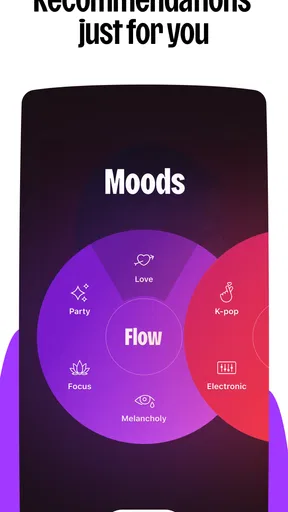
The "Flow" feature is particularly noteworthy. It creates a continuous mix of songs based on your preferences. It’s perfect for those moments when you’re not sure what to listen to but want something that matches your mood. I found myself using it during my morning commute and evening wind-downs.
Flow is most useful when I want a dependable starting point, not when I have a precise request. If I want a particular album in order, I would search for that directly; if I want music without choosing every next track, Flow is a better fit. I’d also use it as a gentle way to test whether my listening history is steering recommendations in the right direction. When it leans too heavily on one mood or familiar artist, switching to a deliberately chosen playlist gives my listening a different center.
Podcasts and More
If you’re a podcast lover, Deezer doesn’t disappoint. The app offers a variety of podcasts ranging from true crime to comedy. I was able to follow my favorite shows easily, and the app notifies you when new episodes drop. It’s a fantastic way to keep up with the latest episodes without having to search for them manually.
Combining music and podcasts is convenient if you prefer one place for both, but it is not automatically better than using a dedicated podcast app. Someone who relies on specialized podcast controls, careful episode organization, or a workflow built around several shows may prefer an app focused entirely on spoken audio. Deezer makes more sense when podcasts are one part of a broader listening routine and you value having them near your music.
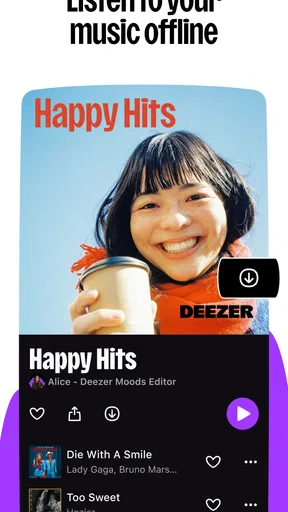
The ability to download music and podcasts for offline listening is a lifesaver. Whether you’re on a flight or in an area with spotty internet, you can have your entertainment ready to go.
For a trip, I would prepare downloads while connected and check that the specific albums, playlists, or episodes I plan to use are actually available offline before leaving. This is a small but worthwhile habit: downloading only after a connection becomes unreliable is too late, and a saved item is useful only if it is the one I intended to have ready. Offline listening is also handy for a commute with patchy reception, where relying on a live stream can interrupt a carefully chosen queue.
There is a trade-off to that preparation. Offline listening works best when you decide in advance what you want, while discovery works best when you are online and open to browsing. I would keep a compact set of reliable options for travel and daily routines, then use connected time to explore. That avoids turning every departure into a last-minute hunt through the catalogue.
Sound Quality and Features
Now, let’s talk about what’s arguably the most crucial aspect of a music app: sound quality. Deezer offers high-quality audio, and if you opt for their "HiFi" plan, you get lossless audio. As someone who appreciates crisp sound, this feature is a significant plus. It’s like having a concert in your earphones.
Audio quality matters most when your listening setup and surroundings let you notice the difference. For casual playback while walking, cooking, or doing chores, convenience may matter more than selecting the highest available quality. If you listen closely with suitable equipment and care about lossless sound, the HiFi option may be relevant; if you mostly use audio as a soundtrack to other tasks, I would first ask whether that difference improves your actual routine enough to justify paying for it.
Moreover, the app integrates well with various devices. Whether you’re using it on your phone, tablet, or even smart speakers, Deezer delivers a seamless experience. The cross-device syncing is remarkably smooth, allowing you to pick up right where you left off, regardless of the device you’re using.
That flexibility is useful in a simple, realistic way: I might start listening on my phone during a trip home and continue on another supported device once I am settled. Still, if you mainly listen on one phone with headphones, cross-device continuity is a bonus rather than a reason by itself to choose Deezer. I would compare it with whichever service already works naturally with the speakers or devices I use most, since the least-friction option often wins over a feature I rarely need.
User Experience
Overall, the app is user-friendly and aesthetically pleasing. Navigating through different sections is straightforward, and the app doesn’t overwhelm you with too many options at once. I appreciate that they’ve kept the design clean and focused on delivering a quality listening experience.
The way I would make it last is by giving each part of the app a job: saved music for deliberate choices, Flow for low-effort listening, and Explore for occasional discovery. That keeps the home screen from becoming a pile of things I sampled once and forgot. It also gives recommendations clearer signals over time, because my regular listening and my experiments are not all treated as the same kind of need.
One little gripe I have is the occasional lag when switching between songs or podcasts, but it’s nothing too disruptive. The app generally performs well, and updates seem to address performance issues promptly.
Even minor delays can be more noticeable when I am switching rapidly between a podcast and music or trying to get something playing while walking out the door. If uninterrupted, instant response is essential to you, that friction is worth testing in your own routine rather than assuming it will never happen. It is not enough to put me off, but it is a reminder that a broad feature set does not guarantee every transition will feel immediate.
Another possible source of fatigue is choice. A large catalogue and a steady stream of recommendations are useful when I want something new, but less helpful when I am tired and just want one familiar album. I would not expect personalization to read every mood perfectly. Keeping a few trusted playlists or albums easy to revisit can make the experience calmer than relying on recommendations to solve every listening decision.
That balance is why Deezer seems best suited to someone who listens regularly, enjoys a mix of music and podcasts, and is willing to save a few dependable options. It may be a weaker fit for a listener who wants a strictly ad-free experience without paying, rarely uses recommendations, or already has a collection and playback setup that meets every need. People who prioritize a specialist podcast workflow or a particular device ecosystem may find a dedicated alternative more convenient; people who want discovery and everyday music in one app have more reason to stay.
If you’re thinking about diving into the world of music streaming or switching from another service, Deezer is definitely worth considering. Its combination of music, podcasts, and user-friendly features makes it a strong contender in the crowded streaming market.
For someone switching, I would not move everything at once just because the first session feels fresh. Try it alongside your usual listening for a while: use it for the commute, a focused music session, and a podcast you follow. That gives you a fair comparison of the things that matter day to day—how quickly you reach the audio you want, whether recommendations become useful, and whether offline preparation fits naturally into your plans.
My long-term test is simple: after the novelty of browsing fades, does the app still save time or improve a routine? Deezer has a credible case if Flow removes the daily “what should I play?” decision, downloads make travel more reliable, and recommendations occasionally lead me to something I want to keep. If I stop using those parts and find myself fighting ads or browsing without purpose, its broad catalogue alone would not be enough to keep it in regular rotation.
So, if you haven't yet, maybe it’s time to give Deezer: Music & Podcast Player a spin. It’s like having the world’s music library at your fingertips, ready to accompany you on every occasion. Happy listening!
Verdict
Strengths of Deezer: Music & Podcast Player
- Extensive music library available.
- High-quality audio streaming options.
- Offline mode for premium users.
- Personalized playlists and recommendations.
- User-friendly interface design.
Limitations of Deezer: Music & Podcast Player
- Free version has limited skips.
- Ads in free version can be intrusive.
- Some songs may not be available.
- Requires internet for most features.
- Premium can be pricey for some users.
Similar Picks in This Category
View All
YouTube Music
Google LLC4.4

Samsung Music
Samsung Electronics Co., Ltd.3.8

Spotify: Music and Podcasts
Spotify AB4.3

JioSaavn - Music & Podcasts
Saavn Media Limited4.3

Lark Player:Music Player & MP3
Lark Player Studio - Music, MP3 & Video Player4.6

StarMaker: Sing Karaoke Songs
SKYWORK AI PTE. LTD.4.3
You May Also Like
View All
Frequently Asked Questions
What is Deezer and how does it work?
Deezer is a music streaming app providing access to over 90 million tracks, podcasts, and radio stations. Users can create playlists, discover new music through personalized recommendations, and listen offline with a subscription. The app is available on multiple devices, ensuring seamless listening experiences across platforms.
Is Deezer free to use?
Deezer offers a free version with limited features and ads. Users can upgrade to Deezer Premium or Family plans for ad-free listening, offline access, and enhanced sound quality. There’s also a Deezer HiFi option for audiophiles seeking lossless audio streaming. Each plan comes with a free trial to test the features.
How does Deezer's music discovery feature work?
Deezer's music discovery is powered by its Flow feature, which provides personalized music recommendations. Flow learns from your listening habits, favorite tracks, and artists to suggest new music tailored to your taste. Additionally, curated playlists and themed channels help users explore diverse genres and trends.
What devices are compatible with Deezer?
Deezer is compatible with a wide range of devices, including smartphones, tablets, smart TVs, and web browsers. It also supports integration with smart speakers such as Amazon Alexa and Google Assistant, allowing users to control playback via voice commands. Compatibility ensures you can enjoy Deezer across all your favorite devices.
How does Deezer compare to other music streaming services?
Deezer stands out with its extensive library, Flow feature, and high-quality audio options. While it competes with services like Spotify and Apple Music, Deezer's unique selling points include its global music catalog and exclusive content. Choosing a service often depends on user interface preferences and specific feature needs.
